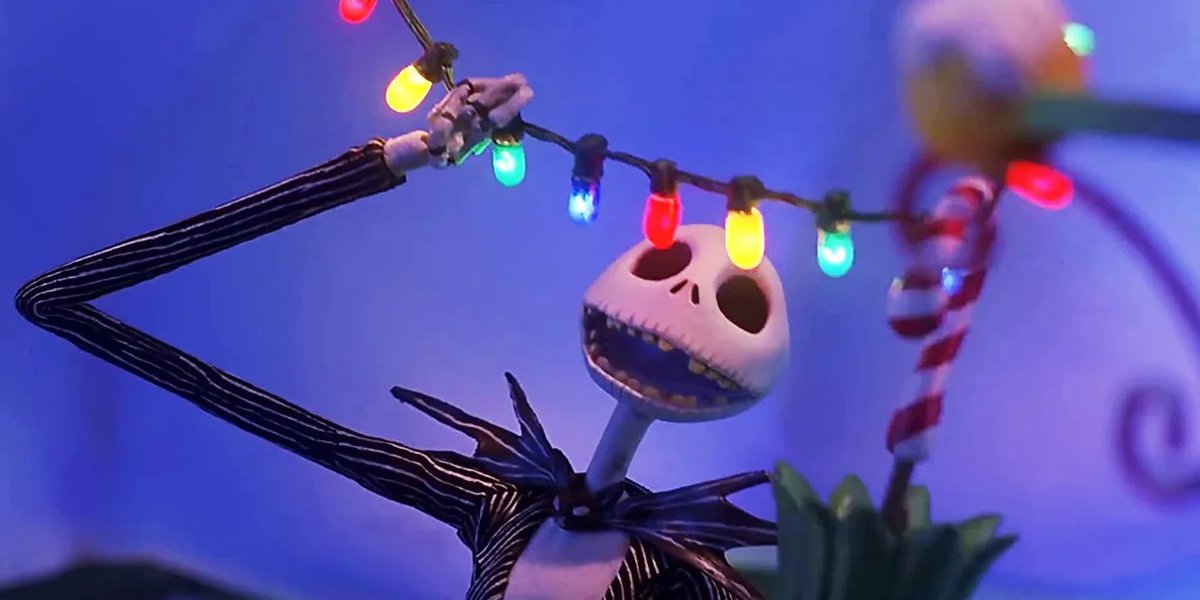
The year is 1993. A quirky, stop-motion animated film bursts onto the scene, bringing with it a dizzying blend of spooky charm and festive cheer. Decades later, the debate still rages: Is The Nightmare Before Christmas a Halloween movie, or does its heart truly lie under a blanket of snow? For countless fans and film scholars alike, the arguments for why The Nightmare Before Christmas is undeniably a Christmas movie are as compelling as Jack Skellington's transformation from Pumpkin King to a misguided, yet well-intentioned, Santa.
This isn't just about seasonal aesthetics; it's about narrative arc, thematic resonance, and the sheer volume of its runtime dedicated to the most wonderful time of the year. Let's unwrap the reasons this cult classic has earned its rightful place among the holiday pantheon.
At a Glance: Why Jack Skellington Belongs on Your Christmas Watchlist
- Runtime Focus: The vast majority of the film takes place in the lead-up to and during Christmas, not Halloween.
- Classic Redemption Arc: Jack Skellington undergoes a transformative journey of self-discovery, similar to beloved Christmas characters like Scrooge.
- Thematic Alignment: It explores core Christmas messages: finding purpose, giving, and understanding the true spirit of a holiday.
- Musical Score: While it has Halloween anthems, its most pivotal songs ("What's This?") are distinctly Christmas-themed.
- Iconic Christmas Imagery: The film vividly portrays Christmas Town, Santa, reindeer, and presents, albeit through a Halloween lens.
- Enduring Legacy: Disney's official re-attribution and its perennial presence in parks and merchandise solidify its holiday status.
The Clock Doesn't Lie: The Overwhelming Christmas Runtime
Let's cut right to the chase: if you're tallying minutes, The Nightmare Before Christmas dedicates precious little screen time to its namesake holiday. The film, clocking in at 71 minutes, spends a mere 4 minutes and 32 seconds in the immediate aftermath of Halloween. This brief opening sets the stage for Jack Skellington's ennui with his Pumpkin King duties, but it quickly pivots.
From the moment Jack stumbles upon the mysterious, motif-bearing tree doors and discovers Christmas Town, the narrative becomes singularly focused on the winter holiday. The vast majority of the film unfolds during the lead-up to and on Christmas itself. We witness Jack's meticulous (and misguided) preparations, the creation of "gifts," the kidnapping of Santa Claus, and the chaotic "Christmas Eve Montage." This isn't a Halloween story about Christmas; it's a Christmas story initiated by a Halloween character. The film's thrilling ride through fall quickly splats right into winter, making its primary setting unequivocally the festive season.
Jack's Journey: A Quintessential Christmas Redemption Arc
At its heart, The Nightmare Before Christmas is a story of existential crisis, self-improvement, and ultimately, redemption. This narrative structure is a hallmark of many beloved Christmas movies. Think of Ebenezer Scrooge in A Christmas Carol, who finds his humanity; John McClane in Die Hard, rediscovering his family's importance; or George Bailey in It's a Wonderful Life, who learns the value of his own life. Jack Skellington fits squarely into this tradition.
Initially, Jack is bored and purposeless despite his success as the Pumpkin King. He yearns for something more, a feeling of newness and joy he finds personified in Christmas Town. His attempt to usurp Santa's role, while catastrophically misguided, stems from a genuine if naive desire to bring happiness. He's not malicious; he's simply out of his element, misunderstanding the very essence of Christmas.
His "transformative event"—being shot down by a heat-seeking missile on Christmas Eve—serves as his rock-bottom, his moment of realization. From this point, Jack's arc shifts dramatically. He returns to Halloween Town, filled with remorse and a renewed understanding of his true place, but also with a critical Christmas mission: to save Santa Claus and rectify his mistakes. His actions lead to the joyous restoration of Christmas, culminating in him bringing a touch of holiday cheer back to Halloween Town with a new snowfall. This arc of error, insight, and positive change is deeply synonymous with the festive season's messages of hope, forgiveness, and finding one's purpose.
Beyond the Spook: Musical Moods and Holiday Harmony
The genius of Danny Elfman's mesmerizing score is how it bridges two distinct holidays, creating a truly unique sonic landscape. While "This is Halloween" and "Kidnap the Sandy Claws" perfectly encapsulate the spooky, macabre side of Halloween Town, it's the Christmas-centric songs that drive the emotional core of the film.
"What's This?" is arguably the film's most iconic and pivotal musical number. It's a genuine outpouring of wonder and childlike fascination as Jack discovers Christmas Town. The bright, hopeful melodies, the cheerful lyrics, and the visual splendor of snow, lights, and presents are unequivocally Christmas in spirit. Later, the "Christmas Eve Montage," despite its chaotic visuals, features typical, albeit twisted, Christmas sounds.
This blend isn't just clever; it ensures the film resonates throughout the year, making it highly rewatchable for Halloween, Christmas, or even a "Christmas in July" pick. However, the emotional weight and narrative progression are undeniably anchored by the songs that celebrate or grapple with the concept of Christmas. The music effectively underscores the narrative shift from Jack's Halloween identity to his Christmas pursuit, making the film's musical heart beat in rhythm with the holiday season.
World-Building Wonder: The Magic of Christmas Town
While Halloween Town is a masterclass in gothic whimsy, the film's immersive world-building truly shines when it introduces Christmas Town. Jack accesses this fantastical place via mysterious, motif-bearing tree doors, transporting viewers instantly into a vibrant, joyful realm that contrasts starkly with his own. The visuals of Christmas Town—the sparkling snow, the twinkling lights, the cheerful elves, and Santa's workshop—are pure holiday magic.
The film spends considerable effort establishing the aesthetics and spirit of Christmas Town, highlighting everything Jack finds so captivating. This meticulous portrayal isn't just background; it's the catalyst for Jack's entire journey. Without the vivid depiction of Christmas and its traditions, Jack's fascination—and subsequently the plot—would hold no weight. The interplay between the fantastical world of holiday creatures and glimpses of the real world, where confused kids and horrified parents react to Jack's Christmas attempts, further grounds the film in the universally recognized reality of the holiday.
Characters with Heart: Finding Purpose in the Holidays
Beyond Jack, the eccentric cast of characters, from Sally to the two-faced mayor and the clown with the tear-away face, are efficiently introduced and humanized. Each contributes to the film's rich tapestry, but it's Jack and Sally's arcs that resonate most deeply with holiday themes.
Jack, as established, seeks purpose beyond his Pumpkin King role. His journey is about understanding where he truly belongs and what brings him genuine fulfillment, a common reflective theme during the holiday season. Sally, a creation of Dr. Finkelstein, seeks to escape her confines and, more importantly, to help Jack. Her intuition often sees the flaws in Jack's grand Christmas plan, making her the voice of reason and care. She, too, finds her purpose through her love for Jack and her desire to protect him and Christmas itself.
Their personal growth and search for belonging against the backdrop of a significant holiday align perfectly with the introspection and familial connections often associated with Christmas narratives. The film's ability to make these visually distinct claymation characters so relatable in their emotional struggles further solidifies its place as a story that speaks to the human condition, making it a powerful vehicle for Christmas themes.
Pop Culture Reign: Its Enduring Christmas Legacy
Thirty years after its release, The Nightmare Before Christmas remains a timeless classic, and its enduring legacy is largely tied to its undeniable status as a holiday staple. Its significant influence on pop culture is evident in the year-round availability of merchandise, spanning everything from clothing to home decor. This isn't just a Halloween phenomenon; the film's iconography is prevalent during the Christmas season as well.
Consider its journey within the Disney canon. Initially released under Touchstone Pictures due to its darker themes, Disney later re-attributed the film to its own studio due to its widespread popularity. It's one of the few Disney films regularly rereleased in theaters, often during both the Halloween and Christmas seasons. Most notably, it's a mainstay at Disney Parks, where the Haunted Mansion attraction is famously revamped as "Haunted Mansion Holiday" starring Jack and his friends during the holiday season.
The "Nightmare Revisited" album, released in 2008, features artists reinterpreting its songs, a testament to its cultural resonance. Director Tim Burton's refusal to greenlight a sequel is a protective measure, ensuring the film's unique legacy remains untarnished. Its continued success, yearly theatrical distributions, and streaming on Disney+—surpassing $100 million in box office revenue—are clear indicators of its enduring appeal, rooted firmly in its fantastical world-building, iconic characters, and its unmatched holiday-spanning rewatchability. This consistent presence and celebration across holiday seasons underscore its fundamental identity as a Christmas movie.
Addressing the Elephants in the Room: Common Misconceptions
It’s easy to get caught up in the spooky aesthetic, but let’s tackle some common reasons people might incorrectly classify The Nightmare Before Christmas as just a Halloween movie.
"But It's Called 'Nightmare'!"
Yes, the title includes "Nightmare," suggesting something dark or frightening. And indeed, elements of Halloween Town are designed to be delightfully grotesque. However, the "nightmare" in the title largely refers to Jack's disastrous attempt to take over Christmas. His intentions are good, but his execution is terrifying for the recipients of his "presents." The film showcases the nightmare of a misunderstood Christmas, not simply a Halloween nightmare. It's a tale of cultural misunderstanding and the chaotic results, framed within the festive season.
"It's Too Dark for Christmas"
The film certainly has a unique, gothic charm. Jack Skellington is a skeleton, Oogie Boogie is a burlap sack full of bugs, and the residents of Halloween Town are various monsters. However, many beloved Christmas stories feature dark themes. Think of the melancholic tone of It's a Wonderful Life before George Bailey's revelation, or the grim poverty and loneliness explored in A Christmas Carol. Christmas, culturally, often acts as a backdrop for stories of overcoming hardship, finding light in darkness, or appreciating joy through contrast. The Nightmare Before Christmas uses its darker aesthetic to highlight the warmth and wonder of true Christmas, making the eventual triumph of joy even more poignant.
Is It Both? Diving Deeper into the Holiday Hybrid
While the film masterfully blends the aesthetics of both holidays, its narrative commitment firmly plants it in the Christmas camp. Some might argue that it’s a perfect bridge film, suitable for viewing between October and December. And it is! But that doesn’t negate its primary focus. The film begins with Jack's post-Halloween ennui, then immediately dives into Christmas. The central conflict, the character arcs, and the resolution all revolve around the preservation and understanding of Christmas.
If you're still weighing the options and asking Is Nightmare Before Christmas Halloween?, remember that while it definitely features Halloween, its entire story hinges on Christmas. The film effectively uses the contrast of Halloween's darkness to illuminate Christmas's light. It's not a Halloween movie that happens to mention Christmas; it's a Christmas movie that happens to star Halloween characters. The conflict, the growth, and the resolution are all undeniably driven by the spirit of Christmas, even if viewed through a skeletal lens.
Why It's a Christmas Classic for All Seasons
The genius of The Nightmare Before Christmas lies not just in its classification, but in its ability to transcend traditional seasonal viewing. While it is fundamentally a Christmas movie by narrative design, its unique blend of aesthetics and themes makes it perpetually rewatchable. It offers a fresh, unconventional take on the holiday spirit, appealing to those who appreciate a dash of delightful macabre with their festive cheer.
Its "multi-seasonal cheer" allows it to be enjoyed as a Halloween season kick-off, a foundational Christmas watch, or even as a comfort film any time of the year. This versatility, however, stems from its primary function as a Christmas story that explores what happens when an outsider attempts to interpret a beloved tradition. The film's enduring appeal is attributed to fantastical world-building, iconic characters, and this holiday-spanning rewatchability—a rewatchability that is always, ultimately, pointing back to Christmas.
The Verdict: A Yuletide Masterpiece
For thirty years, The Nightmare Before Christmas has captivated audiences, sparked debates, and carved out a unique place in animated film history. Its masterful stop-motion animation, unforgettable characters, and iconic score make it a cinematic achievement. But when it comes down to its core identity, the evidence overwhelmingly points to Christmas.
From its dominant runtime dedicated to the holiday, to Jack Skellington's classic Christmas redemption arc, to its thematic alignment with purpose, generosity, and understanding the true spirit of a season, the film resonates with the very essence of Christmas. It’s a celebration of wonder, a cautionary tale of misunderstanding, and ultimately, a heartwarming story of finding one's place and bringing joy. So, as the snow begins to fall and the lights begin to twinkle, don't hesitate to queue up The Nightmare Before Christmas. It's not just a holiday movie; it's a Christmas movie through and through, offering a wonderfully dark and utterly unique twist on the most magical time of the year. It's a testament to the fact that Christmas can be celebrated, and understood, in many different shades—even those that are delightfully ghoulish.
When considering its place in your holiday movie marathon, remember that while it has elements that might make you ponder whether it's primarily a Halloween movie, its narrative engine is unmistakably fueled by Christmas spirit. This film isn't just a classic; it's a Christmas classic that continues to charm and provoke discussion, cementing its status as a vital part of the festive season.